6th Global
Women’s Empowerment & Leadership Summit
THEME: "Empowering Global Entrepreneurs & Leadership for Tomorrow"
 23-24 Nov 2026
  Holiday Inn Express Bangkok, Thailand
 THEME: "Empowering Global Entrepreneurs & Leadership for Tomorrow"
23-24 Nov 2026
Holiday Inn Express Bangkok, Thailand 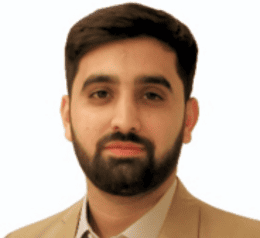
Khyber Medical University, Pakistan
Title: A Mixed-Methods Study Protocol for Integrating Mental Health Services into Primary Care for Transgender Communities Through the Mhgap Intervention (Mentra) in Pakistan
Syed Muhammad Uzair Shah is a sociologist, researcher, and academic from Peshawar, Khyber Pakhtunkhwa, Pakistan. He holds an M.Phil. in Sociology from the University of Peshawar with distinction and is currently pursuing a PhD in Sociology focusing on spirit possession and healing practices in Peshawar.
He has worked on several national and international research projects, including the NIHR-UK funded TRANSLATE project on early intervention in psychosis and the MRC-UK funded THE HOPE project. He has also contributed to projects related to education, social development, digitalization of Pashto proverbs, and CPEC-related community perspectives.
Mr. Shah has teaching experience as a Visiting Lecturer at the University of Peshawar and other educational institutions. He has published research papers in the fields of mental health, sociology, education, criminology, and socio-cultural studies. His academic achievements include a bronze medal at graduate level and multiple merit and performance awards.
Background Providing mental health services for transgender individuals within primary care is imperative due to the unique challenges they face. Transgender people experience elevated discrimination, stigma, and social exclusion, increasing mental health risks especially in low- and middle-income countries such as Pakistan. Primary care offers accessible, inclusive platforms to address these needs, enabling supportive environments for timely interventions. Early identification can mitigate psychological distress, depression, and anxiety. Integrating services within primary care promotes holistic care and fosters safe spaces where transgender individuals feel understood, validated, and empowered. This study aims to estimate levels of depression, anxiety, and suicidal ideation among transgender individuals, and to pilot a mental health gap action program (mhGAP)-based intervention for common mental disorders in primary healthcare settings in Peshawar, Pakistan. Methods We will conduct an 18-month mixed-methods pilot feasibility study employing a single-arm pre–post design in primary care, including general practitioner (GP) clinics in Peshawar, Khyber Pakhtunkhwa. A sample of 144 transgender participants scoring ? 3 on both PHQ-2 and GAD-2 at screening will be enrolled. Participants will be referred to GPs trained in mhGAP to diagnose depression, anxiety, and suicidal ideation, and to deliver focused cognitive behavioral therapy sessions. Outcomes will be assessed at baseline, 2nd months, and 4th month. Fidelity to mhGAP protocols will be monitored through supervision, checklists, and refresher training for GPs. Pre and post-intervention anxiety and depression scores will be compared using SPSS version 29.0. Discussion Findings will offer an evidence-based pathway for integrating mental health care for transgender individuals in primary care, improving detection and management of common mental disorders, and informing scale-up in similar lowresource contexts. We anticipate improved symptoms, reduced suicidal ideation, and enhanced engagement with inclusive, supportive services.
