6th Global
Women’s Empowerment & Leadership Summit
THEME: "Empowering Global Entrepreneurs & Leadership for Tomorrow"
 23-24 Nov 2026
  Holiday Inn Express Bangkok, Thailand
 THEME: "Empowering Global Entrepreneurs & Leadership for Tomorrow"
23-24 Nov 2026
Holiday Inn Express Bangkok, Thailand 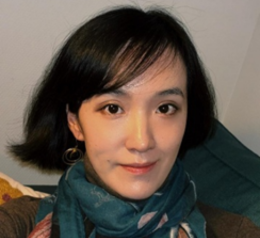
University of Amsterdam, Netherlands
Title: From Reproduction to Self-Production: A Comparative Reading of Imperfect Womanhood in Han Kang’s The Vegetarian and Kawakami Mieko’s Breasts and Eggs
Jingyi Wan is a PhD candidate at the University of Amsterdam specializing in contemporary East Asian literature and modernization. Her work has been published in journals such as Pólemos and Cogent Arts & Humanities. Her forthcoming work will appear in the edited volume Women in World Literature (Liverpool University Press, 2026). She has presented her research at international conferences including the Women in World(-)Literature Conferences (Warwick, 2022 and 2026) and the Critical Legal Conference (Lund, 2024). She holds a BA in Journalism from Fudan University (2018) and an RMA in Literary Studies from the University of Amsterdam (2021).
Both Han Kang’s The Vegetarian (2007) and Kawakami Mieko’s Breasts and Eggs (2019) feature a shift towards imperfect womanhood which aligns a shift towards self-production. Contemporary perfect womanhood demands that women become not only perfect wives and mothers but also paid workers (Bueskens 2018). The two novels I examine in this talk, however, seem to provide examples of resistance towards perfect womanhood. Becoming an imperfect woman involves a mode of producing oneself that cuts back space for reproductive duties and commitments. In both novels, the desire to become imperfect is manifest in communication that goes beyond human languages. In The Vegetarian, the younger sister – Yeong-hye – tries to make the older sister – In-hye – see that In-hye devotes herself to a perfect womanhood that she herself cannot sustain, by stopping first being a woman and second being a human. Yeong-hye, in a sense, embodies a withdrawal from both the process of reification and that of de-reification as theorized by Timothy Bewes in Reification, or the Anxiety of Late Capitalism (2002). Reification transforms the relation between human and their labour and that between humans into things that seem to assume a phantom-like objectivity. In-hye, through her sister’s radical withdrawal, sees that imperfection is fundamental to the production of her self beyond a wife, a mother and a paid worker. In Breasts and Eggs, the daughter – Midoriko – resorts to gestures in place of spoken words, to communicate with her mother – Makiko, – and to reconcile self-production with reproduction. In a way, the daughter appeals to a self-production through becoming abstract, that the mother, fully committed to reproduction and concreteness, cannot understand. Nevertheless, they come together in the gesture of cracking eggs, thus embodying a more capacious self that goes beyond merely being the reproductive means of the patrilineal society.
