6th Global
Women’s Empowerment & Leadership Summit
THEME: "Empowering Global Entrepreneurs & Leadership for Tomorrow"
 23-24 Nov 2026
  Bangkok, Thailand
 THEME: "Empowering Global Entrepreneurs & Leadership for Tomorrow"
23-24 Nov 2026
Bangkok, Thailand 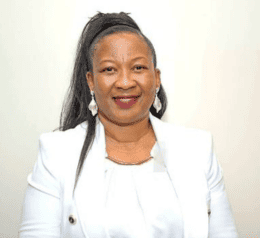
Zimbabwe
Title: The DARE Framework for Digital Gender Justice: Preventing Technology-Facilitated Gender-Based Violence as an Emerging Digital Pandemic
Ntombi Muchuchuti is a senior feminist development and humanitarian leader with over 20 years of experience shaping policy, programmes, and systems across Sub-Sahara Africa, and beyond. Her expertise spans gender justice, SRHR, HIV, child protection, and human rights, with a strong focus on strengthening grassroots ecosystems and advancing rights-based, locally led development.
She has held senior leadership roles including Regional Director, Country Director, and Executive Director, managing complex, multi-million-euro portfolios and partnerships with governments, donors, and civil society. She has led multi-country portfolios, mobilised significant donor resources, and managed +200 partnerships of community-based organisations.
Muchuchuti is the Founder of AfRIKAD, a regional evidence-to-action institute advancing inclusive development, policy innovation, and systems transformation across Africa. She has contributed to global and regional policy dialogue, including United Nations platforms and high-level SRHR and gender equality forums. Her work is grounded in feminist, rights-based, and community-driven approaches that centre equity, resilience, and sustainable impact, with a current focus on advancing digital gender justice and addressing emerging forms of technology-facilitated gender-based violence.
Technology-facilitated gender-based violence (TFGBV), including cyberstalking, sextortion, non-consensual image sharing, and online harassment is rapidly reshaping gender inequality. However, responses remain fragmented, nationally confined, and insufficiently attuned to the realities of digital ecosystems and cross-border mobility. In Sub-Saharan Africa, these gaps are amplified by conflict, displacement, weak institutional capacity, and unequal digital access, leaving survivors without adequate protection or recourse. More so, cross-border dynamics with perpetrators evading justice, trafficking routes, circulation of abusive digital content across jurisdictions, highlight the absence of strong extradition agreements, regional coordination mechanisms, and harmonised legal frameworks.
This paper introduces the Digital Action for Resilience and Equality (DARE) Framework for Digital Gender Justice, a feminist, regional, and systems-based model designed to address TFGBV at scale. Drawing on insights from multi-country practice across diverse African contexts, the framework proposes a reconceptualisation of TFGBV as an intersectional challenge located at the nexus of gender inequality, digital transformation, and migration dynamics. The paper identifies three systemic gaps: The absence of survivor-centred digital justice ecosystems; Limited alignment between legal frameworks and the cross-border nature of digital abuse; and The marginalisation of feminist leadership in digital governance. These gaps contribute to persistent impunity, underreporting, and exclusion of vulnerable populations, including migrants and displaced women.
In response, the DARE Framework advances five interconnected pillars: Survivor-centred, digitally enabled services; Digital resilience and safety literacy; Gender-responsive legal and policy reform; Cross-border accountability mechanisms; and Feminist leadership in digital governance. The framework emphasises scalability, adaptability, and alignment with global and regional commitments on gender equality, digital rights, and justice.
The paper calls for a shift from isolated interventions toward coordinated, feminist-led systems transformation. It presents the DARE Framework as a practical and policy-relevant model, offering a strategic policy relevant blueprint for governments, donors, and civil society to advance safe and inclusive digital spaces for women and girls globally.
