6th Global
Women’s Empowerment & Leadership Summit
THEME: "Empowering Global Entrepreneurs & Leadership for Tomorrow"
 23-24 Nov 2026
  Holiday Inn Express Bangkok, Thailand
 THEME: "Empowering Global Entrepreneurs & Leadership for Tomorrow"
23-24 Nov 2026
Holiday Inn Express Bangkok, Thailand 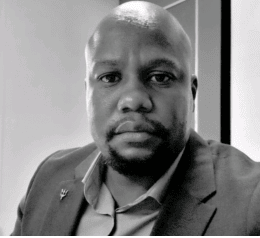
University of Social Africaa, South Africa
Title: Empowering Women Living with HIV: Resilience Strategies and Psychosocial Adjustment in a Resource-Constrained Community in South Africa
Masevhege Mambo Trevor is a Public Health and Social Work professional with research interests in HIV/AIDS, Public Health, and Social Work. He is highly experienced in higher education, teaching, and academic research, and has contributed articles to reputable international peer-reviewed journals. Mr. Mambo holds qualifications in Social Work and Public Health from the University of Venda, the University of Pretoria, and the University of South Africa. He is currently pursuing his PhD in Social Work at the University of South Africa. Founder and Chief Executive Officer of The Philanthropists (Nonprofit Organization), a community-based organization uplifting communities through development.
Despite significant advances in HIV prevention and treatment, women living with HIV (WLHIV) in South Africa continue to face psychosocial, socioeconomic, and gender-related challenges that undermine their well-being, agency, and participation in family and community life. Although biomedical advances have improved treatment outcomes and increased life expectancy, less attention has been paid to understanding how women draw on personal, family, and community resources to rebuild their lives, strengthen their resilience, and regain a sense of agency after an HIV-positive diagnosis. Strengthening psychosocial resilience is an important component of comprehensive HIV care and a critical pathway to empowering women to make informed decisions, actively manage their health, and improve their quality of life, particularly in resource-constrained communities.
This study examined the resilience strategies used by women living with HIV and the factors that influence their psychosocial adjustment in a public health and social work context. A qualitative hermeneutic phenomenological design was used to explore the lived experiences of purposively sampled women living with HIV in the Winnie Mandela informal settlement in Gauteng Province, South Africa. Data were collected through in-depth semi-structured interviews until saturation was reached and then analyzed using Tesch's method of qualitative data analysis.
The findings showed that resilience was shaped by the interplay of individual, family, community, and structural influences rather than by individual coping alone. Participants described an initial period of emotional distress after diagnosis, followed by gradual psychosocial adjustment supported by voluntary disclosure of HIV status, family acceptance strengthened through HIV education, healthy lifestyle practices, and participation in peer support groups. These strategies strengthened women's confidence, self-efficacy, decision-making capacity, and ability to actively manage their health, while fostering a renewed sense of purpose, dignity, and social belonging. However, prolonged clinic waiting times, limited access to psychosocial support services, persistent stigma, and ongoing socioeconomic challenges constrained resilience and hindered access to comprehensive care.
The findings demonstrate that resilience extends beyond psychological adaptation and serves as an important foundation for women's empowerment by strengthening agency, self-efficacy, and meaningful social participation. The study highlights the important role of public health and social work in creating supportive environments that enable women living with HIV to rebuild their lives and navigate HIV-related challenges. Integrating psychosocial support, family-centered interventions, and accessible community-based services into existing HIV programs can strengthen resilience, promote women's empowerment, and contribute to more equitable, gender-responsive, and person-centered public health systems.
