6th Global
Women’s Empowerment & Leadership Summit
THEME: "Empowering Global Entrepreneurs & Leadership for Tomorrow"
 23-24 Nov 2026
  Holiday Inn Express Bangkok, Thailand
 THEME: "Empowering Global Entrepreneurs & Leadership for Tomorrow"
23-24 Nov 2026
Holiday Inn Express Bangkok, Thailand 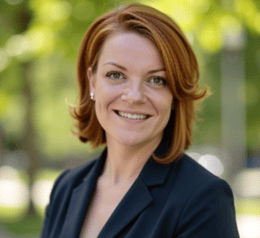
Meaningful Change Consulting, USA
Title: Change Isn’t Broken — Leadership Is
Leslie Ellis, CEO of Meaningful Change Consulting and Certified Change Management Professional (CCMP), specializes in "change rescue"—fixing failed organizational transformations with a 100% success rate. With over 20 years of experience across 55 clients in 42 countries, she has impacted hundreds of thousands of stakeholders at organizations including Bank of America, Duke Energy, Johnson Controls, and Best Buy.
Leslie developed proprietary frameworks, including the Layered Alignment Method™, the Strategic Tension diagnostic tool, and the Change Maturity Quotient™. Her contrarian "don't break what's working" philosophy challenges conventional transformation approaches by building on existing organizational strengths rather than wholesale replacement.
Objectives: This research investigates why 70% of organizational transformations fail and identifies the specific leadership behaviors that determine success. The primary objective is to demonstrate that transformation failure stems from leadership behavior patterns rather than strategic or methodological deficiencies.
Scope and Methods: Over 20 years of "change rescue" work across 47 client organizations in 42 countries provided the empirical foundation. Using proprietary diagnostic tools—the Strategic Tension framework and Change Maturity Quotient™—leadership behaviors were documented during real-time transformation interventions. Organizations ranged from Fortune 500 corporations to mid-sized global enterprises across utilities, manufacturing, healthcare, and construction sectors, impacting hundreds of thousands of stakeholders.
Results: The Layered Alignment Method™, which builds on existing organizational strengths rather than wholesale replacement, achieved 100% success in rescue interventions. Analysis revealed five critical leadership behaviors: (1) navigating influence without formal authority, (2) maintaining strategic tension between stability and innovation, (3) evolving personal behavior parallel to organizational change, (4) building organizational change maturity systematically, and (5) recognizing and leveraging what already works. Women leaders demonstrated particular strength in collaborative influence and stakeholder alignment when given frameworks to navigate organizational complexity.
Discussion: Traditional change management focuses on methodology and employee adoption. This research demonstrates the problem lies upstream—leaders who fail to model the behavior changes they request from others. For women entrepreneurs and global leaders, this finding is particularly relevant as they often lead transformation without traditional positional power, requiring mastery of influence-based leadership.
Conclusions: Empowering tomorrow's leaders requires shifting from change management training to leadership behavior development. The frameworks presented provide actionable tools for women leaders navigating organizational transformation, particularly in environments where they must drive change through influence rather than authority.
